
In the high-octane world of college football, moments of genuine human connection are rare treasures. Spectacular plays, viral celebrations, and dramatic comebacks dominate the headlines.
Yet sometimes, the most unforgettable scenes unfold far away from the roar of the crowd, in the quiet aftermath when the stadium lights dim and the world moves on.
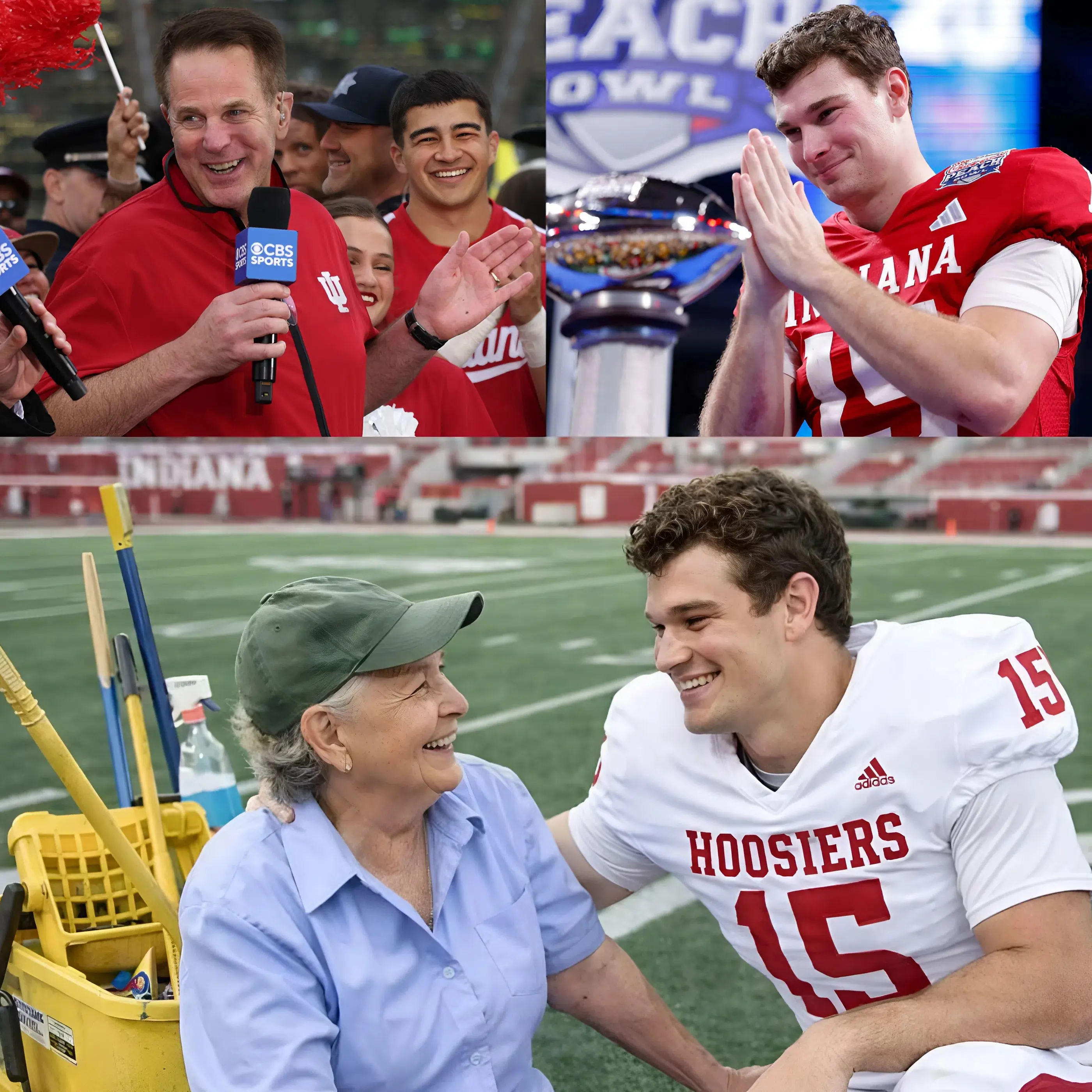
Such was the case one chilly October evening at Memorial Stadium in Bloomington, Indiana.
The Indiana Hoosiers had just dismantled a top-15 opponent in convincing fashion. The scoreboard read 38–17. The stands had shaken with chants of “Mendoza! Mendoza!” as the redshirt sophomore quarterback delivered a near-perfect performance: 312 passing yards, four touchdowns, zero interceptions, and a poise that belied his age. Social media lit up. National pundits began whispering about early Heisman buzz. Teammates carried Fernando off the field on their shoulders. The celebration felt endless.
But when the locker room emptied, when the reporters packed up their microphones, and when the last tailgaters drove away, Fernando Mendoza did something no one expected.
He returned to the field.
Not for extra reps. Not to review plays with coaches. He walked back alone, still wearing his grass-stained practice jersey and shoulder pads, helmet tucked under his arm. He moved toward the far sideline, where a solitary figure worked under the glow of the towering floodlights.
That figure was Clarence “Pop” Johnson—72 years old, slight of build, silver hair peeking from beneath his faded navy maintenance cap. For thirty-eight years, Pop had been the quiet heartbeat of Memorial Stadium’s grounds crew. Every night after practice or games, long after the players and fans had gone home, Pop swept the field, picked up trash, straightened yard markers, and made sure the next day’s team would find their home pristine. He rarely spoke unless spoken to. Most players offered a quick nod or a casual “Thanks, Pop” as they hurried past. Very few lingered.
Fernando Mendoza was different.
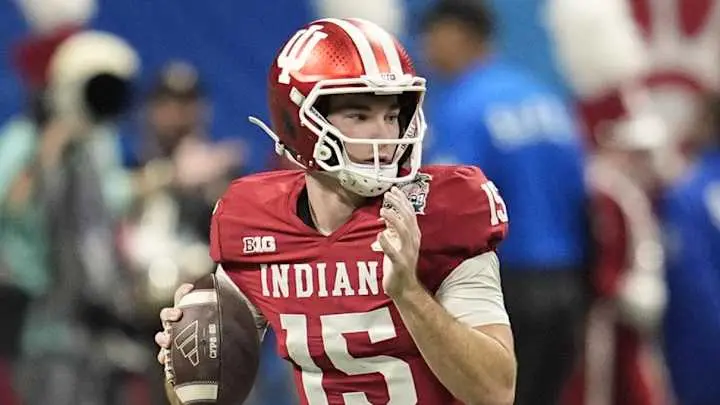
Since his very first days on campus, Mendoza had noticed Pop. He noticed the way the old man moved slowly but with purpose. He noticed how Pop always stayed until the very end, never complaining, never rushing. And one day, early in his freshman year, Mendoza stayed too. They exchanged a few words about the weather. The next day, Mendoza stayed again. Over time, a quiet ritual formed: the star quarterback waited patiently while the elderly janitor finished his work. Sometimes they talked. More often, they simply shared the silence of an emptying stadium.
Pop once told a close friend in the maintenance department: “That Mendoza boy… he sees people. Most kids see the field. He sees the man sweeping it.”
On this night, after the biggest win of his young career, the ritual reached its emotional peak.
Mendoza approached Pop near the 50-yard line. The old man paused, broom in hand, surprised to see the quarterback still there amid the post-victory glow. Without a word, Fernando slowly dropped to one knee—right there on the damp grass, pads creaking softly, head slightly bowed.
Pop froze.
The stadium was nearly empty. Only a handful of late-night staff remained: a security guard near the tunnel, two equipment managers collecting water coolers, and one student worker who happened to glance up from the concourse with his phone in hand.
What happened next would become one of the most shared moments in recent college football history.
Looking up at the elderly janitor with complete sincerity, Mendoza spoke—just one sentence, delivered in a voice soft enough that only Pop could hear it clearly:
“Thank you for believing in me before anyone else did.”
Six words.
They hung in the cool night air like a prayer.
Pop’s eyes instantly brimmed with tears. His weathered hands trembled on the broom handle. He tried to respond, but emotion choked the words before they could form. Instead, he reached out and gently placed his palm on Mendoza’s shoulder pad—the simple, tender gesture of a grandfather steadying a child after a long road.
The student worker on the concourse captured the scene on his phone: grainy footage, shaky framing, floodlights casting long shadows. He didn’t post it immediately. He showed it to a friend the next morning. That friend shared it. Within hours, the clip spread across platforms like wildfire.
Millions watched. Millions cried.
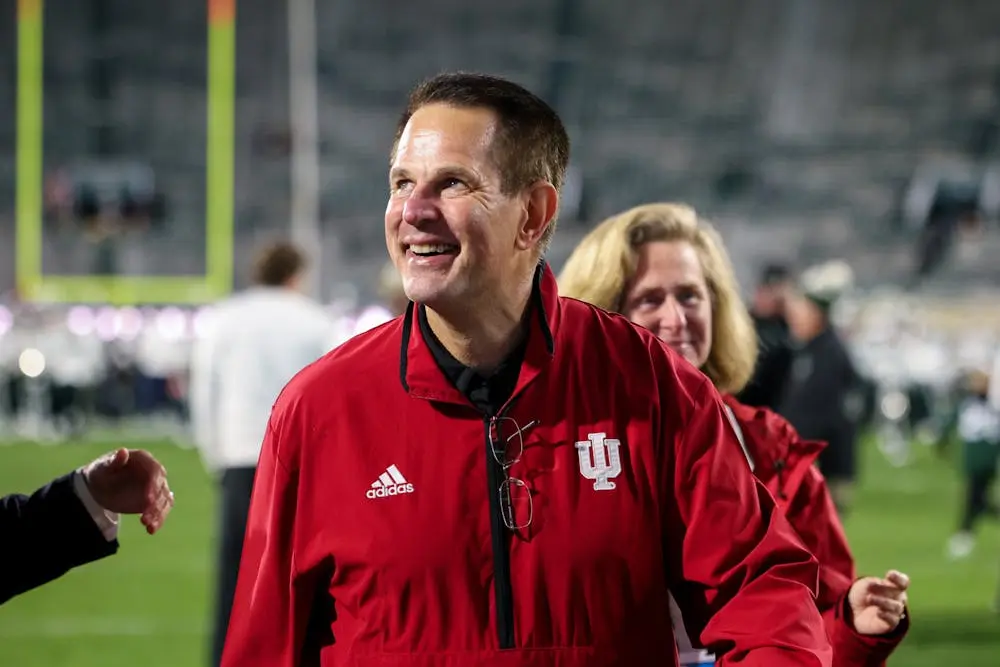
Sports blogs called it “the most powerful moment of the season.” Morning shows replayed the video on loop. Analysts, usually quick to dissect arm strength or footwork, found themselves at a loss for words. Many simply let the footage speak.
What moved people so deeply wasn’t the kneel itself. It was everything it represented.
In an age dominated by self-promotion, NIL deals, and personal branding, here was a rising star—already tasting the first waves of fame—choosing to place himself beneath a man society often renders invisible. A 72-year-old janitor with no social media following, no autograph requests, no glory. A man who had spent nearly four decades quietly serving others, cleaning up after their triumphs, never asking for recognition.
Fernando Mendoza didn’t do it for clout. He didn’t do it for headlines. As he later shared in a rare, reluctant interview: “Pop told me I could be great when I was struggling to believe it myself. Not because of my arm or my numbers—because of who I was trying to become. How do you repay something like that? You don’t. You just show up. And you say thank you the best way you know how.”
Pop Johnson, true to form, remained humble when reporters finally found him in the maintenance shed a week later. Smiling quietly, he said only: “That boy’s got manners. Real ones. That’s all there is to it.”
In the days and weeks that followed, the Mendoza-Pop moment became more than a viral clip. It became a quiet reminder—of dignity, of gratitude, of the invisible people who make big dreams possible.
Fans still cheer Fernando’s throws. They still chant his name. But many Hoosiers faithful will tell you the moment they’ll carry forever isn’t a touchdown pass or a game-winning drive.
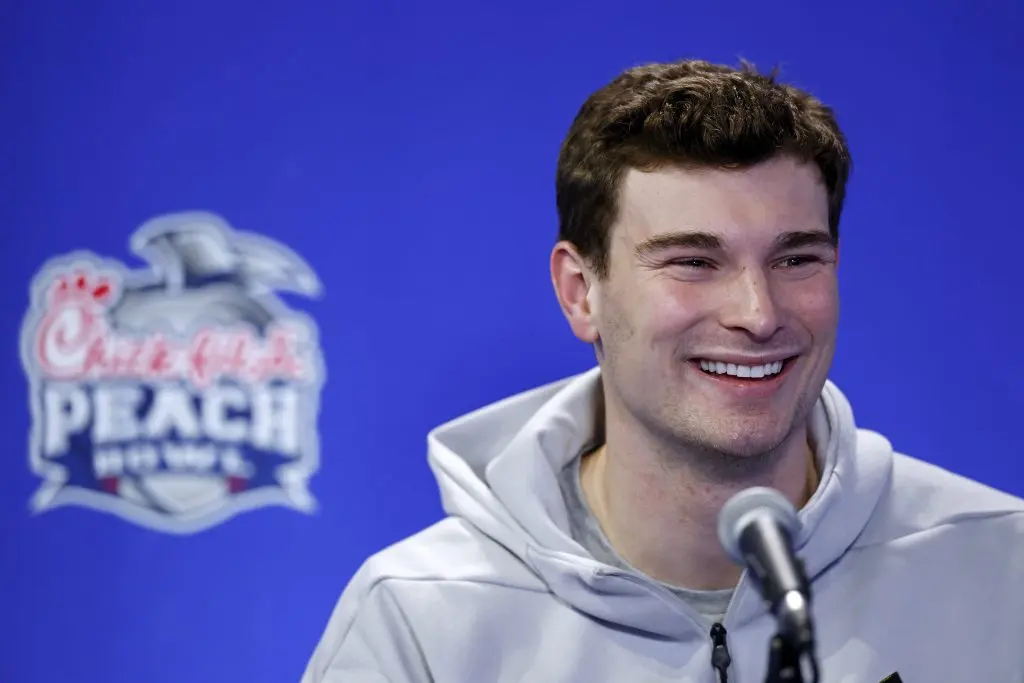
It’s the image of their quarterback on one knee, head bowed before an elderly janitor, saying thank you to the one person who believed in him when the lights were off and the stands were empty.
Because in the end, this story was never really about football.
It was never about victory.
It was about something far more rare and far more lasting:
Dignity.
And sometimes, the most powerful way to honor it is to simply kneel—and speak from the heart.