
“I CAN’T TAKE IT ANYMORE,” – Top star Rory McIlroy broke down in tears as he publicly condemned those who threatened him after finishing T2 at the The Genesis Invitational. He shared a series of horrific hateful messages on social media, including death threats, insults directed at his family—especially his wife Erica and their young daughter—and even wishes for him to “get seriously ill” or “suffer a terrible accident” simply because he lost the event by a razor-thin one-stroke margin.
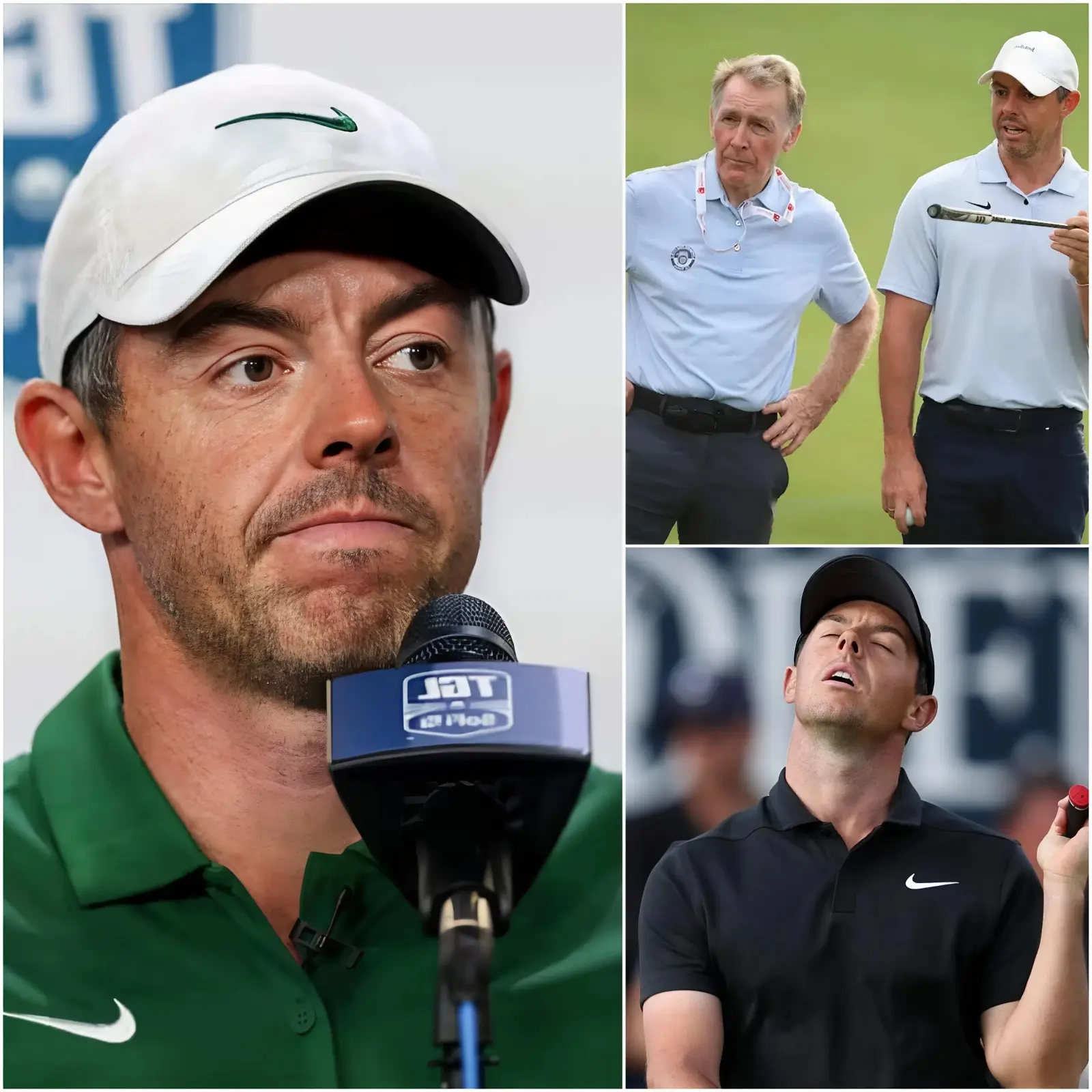
The shocking emotional moment unfolded just days after the tournament concluded, transforming what should have been a routine post-event reflection into a painful public reckoning. McIlroy, widely regarded as one of the most composed and articulate figures in professional golf, appeared visibly shaken as he described the toll the abuse had taken on him and those closest to him.
Fans had watched him battle fiercely throughout the week, demonstrating the resilience and elite shot-making that have defined his career. Yet despite finishing tied for second in a world-class field, the narrative online quickly shifted from praise for his performance to cruel criticism and personal attacks that escalated at an alarming speed.
According to McIlroy, the messages began pouring in almost immediately after his final putt dropped. At first, he expected disappointment and perhaps a few harsh comments about missed opportunities. What he did not anticipate was the sheer volume of explicit threats and deeply personal insults that crossed every imaginable line of decency.
Screenshots he revealed during the press conference showed anonymous accounts urging him to “retire immediately,” accusing him of “choking again,” and, most disturbingly, issuing direct death threats. Several messages targeted his wife Erica, using vile language, while others referenced his daughter in ways that McIlroy described as “sickening beyond belief.”
“I can handle criticism about my swing, my strategy, even my mental game,” McIlroy said, pausing frequently to steady his voice. “But when people drag my family into it, when they wish harm on my child, that’s where it stops being sports and becomes something much darker.”
The Genesis Invitational, one of the most prestigious stops on the PGA Tour calendar, is known for producing dramatic finishes and razor-thin margins. This year was no exception, as McIlroy found himself locked in a tense duel that came down to the final hole, where a single stroke ultimately separated him from victory.
For most athletes, finishing T2 in such a competitive field would be considered a strong showing. Yet in the era of relentless social media scrutiny and high-stakes sports betting, even a near-miss can spark disproportionate outrage from a vocal minority who project their frustrations onto players.
McIlroy acknowledged that he understands the passion fans bring to the game. However, he stressed that there is a fundamental difference between disappointment and dehumanization. “There’s a line,” he said. “And that line has been crossed in a way I’ve never experienced before.”
The emotional weight of the situation appeared to overwhelm him at one point, as tears welled in his eyes while discussing the impact on his family. He revealed that Erica had been forced to limit her own social media activity to avoid encountering the hateful content circulating online.
His daughter, still too young to fully understand the world of professional golf, was thankfully shielded from the ugliness. But McIlroy admitted that the thought of her one day seeing such messages was “heartbreaking” and made him question the culture that has taken root in parts of the sporting world.
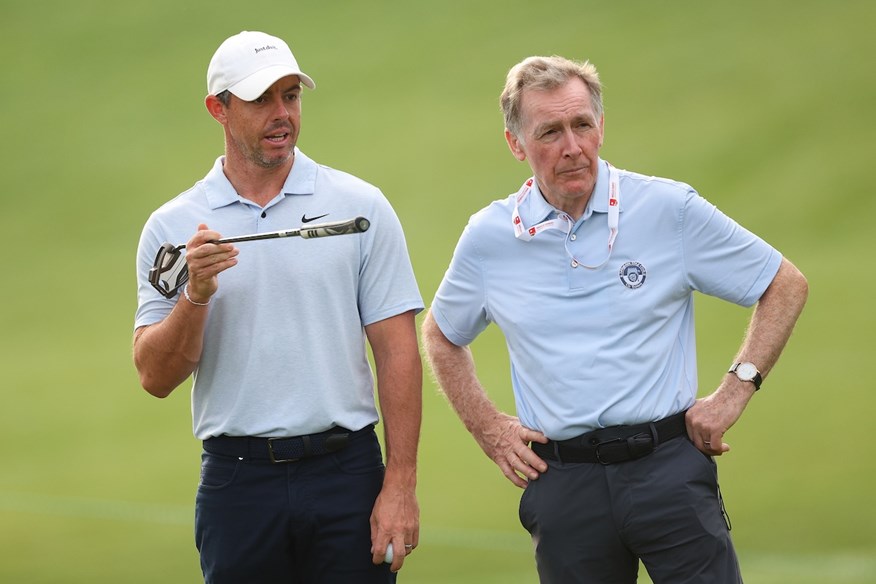
Longtime coach Michael Bannon did not mince words in his response. Standing beside McIlroy, Bannon condemned the attackers in the strongest possible terms and vowed immediate action. He declared that the matter would not be brushed aside as merely “part of being famous.”

Bannon confirmed that he would work closely with the PGA Tour and law enforcement authorities to file a formal criminal complaint. He emphasized that online anonymity should not shield individuals from accountability when threats and harassment cross into potentially criminal territory.
“This is not banter. This is not passion,” Bannon stated firmly. “These are credible threats, and they will be treated as such. We are demanding a full investigation into the accounts responsible for this vicious wave of online attacks.”
The coach’s strong stance has intensified the conversation around cyber abuse in golf, a sport traditionally viewed as genteel and respectful. While other sports have long grappled with toxic online behavior, golf has often been perceived as relatively insulated from such extremes.
However, the rise of digital platforms and the integration of live betting have changed the landscape. Players are now more accessible than ever, with fans able to send direct messages instantly. That accessibility, while positive in many ways, also opens the door to unfiltered hostility.
McIlroy suggested that governing bodies and social media companies must collaborate more effectively to protect athletes. He stopped short of calling for sweeping censorship but insisted that platforms must enforce existing policies against threats and hate speech with far greater consistency.
The PGA Tour released a brief statement expressing solidarity with McIlroy and condemning all forms of harassment directed at players and their families. The organization reiterated its commitment to ensuring a safe environment both on and off the course.
Several fellow professionals also voiced their support, sharing messages of encouragement and urging fans to remember that athletes are human beings first. Many highlighted the mental health implications of sustained online abuse, noting that even the most resilient competitors have limits.
Sports psychologists have increasingly warned about the cumulative effects of digital harassment. Constant exposure to negativity can erode confidence, increase anxiety, and contribute to burnout, especially when attacks become personal and involve loved ones.
McIlroy admitted that for the first time in his career, he briefly considered stepping back from social media entirely. “You start to wonder if it’s worth it,” he confessed. “If winning by one shot or losing by one shot determines whether someone thinks your child deserves to be threatened.”
The broader issue extends beyond a single tournament or player. Cyber abuse has become a systemic challenge across global sports, with high-profile cases emerging in football, tennis, basketball, and now increasingly in golf. Each incident underscores the urgent need for structural solutions.
Law enforcement agencies have in recent years taken a more proactive approach to online threats, particularly when they involve explicit harm. Digital forensics can often trace anonymous accounts, dispelling the myth that online hostility is consequence-free.
Bannon made it clear that pursuing legal action is not about silencing criticism but about drawing a firm boundary. “Critique the performance all you want,” he said. “But the moment you threaten violence or target a child, you’re in a different realm entirely.”
As the investigation moves forward, McIlroy hopes that speaking out will encourage other players to share their experiences. He acknowledged that many athletes suffer in silence, fearing that public vulnerability might be interpreted as weakness.
Instead, his emotional display may mark a turning point in how golf addresses cyber abuse. By bringing the issue into the open, McIlroy has forced fans, officials, and digital platforms to confront uncomfortable truths about the culture surrounding modern sports.
Despite the turmoil, he reaffirmed his love for the game and his determination to continue competing at the highest level. “I’m not going anywhere,” he said resolutely. “But something has to change. We can’t normalize this.”
The coming weeks will likely reveal whether concrete measures follow the strong words. For now, the incident has ignited a full-blown crisis point conversation about accountability, empathy, and the responsibilities that come with fandom in the digital age.
What began as a narrow one-stroke defeat at The Genesis Invitational has evolved into a defining moment far beyond the leaderboard. It has exposed the darker undercurrents of online culture and challenged golf’s institutions to protect the people who give the sport its heart and drama.
In standing up publicly, McIlroy has shifted the focus from a missed putt to a moral imperative. Whether this episode leads to meaningful reform remains to be seen, but one thing is certain: the conversation about cyber abuse in golf is no longer avoidable, and it has arrived with undeniable urgency.